Beneath the Surface
Above water, John Chin serves others—one (heart)beat at a time

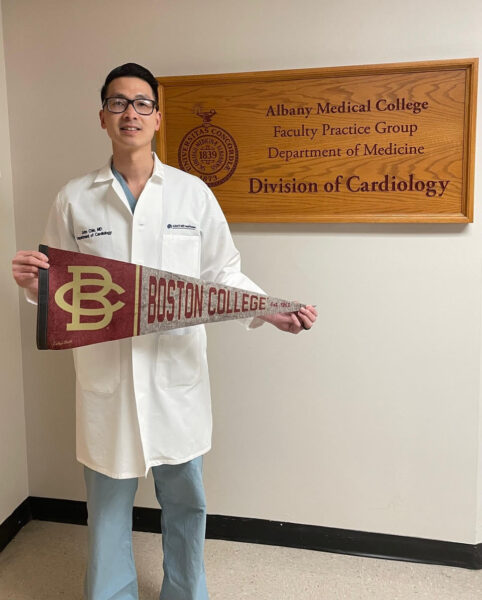
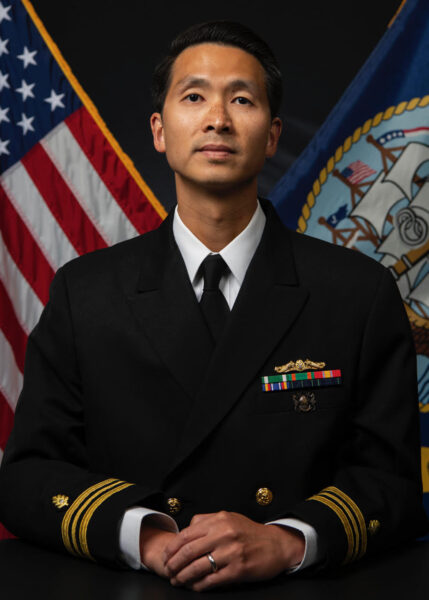
For nearly a decade after completing initial medical training and dive school, Dr. John Chin ’06 practiced medicine beneath the water’s surface. As a medical officer with the U.S. Navy, he supported the Navy’s elite undersea warfare communities by providing medical expertise to submarine crews, SEALs, explosive ordnance disposal teams, and salvage diving units along the East Coast. In 2024, Dr. Chin, a board-certified internist, began a cardiology fellowship at Albany Medical Center. His transition from military medicine to specialized cardiology builds on years of high-pressure, high-stakes experience caring for those who operate in some of the world’s most demanding environments.
How did your experience as a Navy physician shape your approach to patient care above the surface?
JC: My first operational tour as a submarine medical officer made me appreciate all of the readily available hospital resources we sometimes take for granted. Even everyday amenities—like internet and cell service—become highly valued commodities when trying to care for tenuous patients several hundred feet below the surface. Not unlike daily clinical practice, those high-stress situations (but in remote environments) compelled me to be as resourceful and composed as possible to ensure I provided the best care to the sailors. Now that I have transitioned to civilian practice, I have never forgotten those early formative experiences, nor how fortunate I am to be practicing in the most advanced health care system in the world.
What drew you to cardiology after so many years in the Navy as an internist?
JC: I always knew I wanted to be a cardiologist. I think cardiology is the most fascinating specialty in medicine. There are so many new advances in both medical and device therapies that allow us to improve and save people’s lives. After a multitude of memorable experiences over the last 14 years, and with much encouragement from my Navy mentors, my family and I decided it was the best time for me to separate from active-duty service and pursue a civilian fellowship so that we could start the next chapter of our lives.
How has your understanding of service—whether to the country or to your patients—evolved over time?
JC: Each day that I drove to medical school as a student, I read the inscription,“Learning to Care for Those in Harm’s Way”, etched above the entrance. The Uniformed Services University of the Health Sciences creates military physicians for that sole purpose. And while the faculty reminded us daily of our school’s primary mission, it was not until I became embedded with special operations and submarine units that I began to truly understand that profound responsibility. I believe there is no greater job in medicine and in the military than providing the highest quality of care to our service members who voluntarily risk their lives to ensure the safety of our country. While I am no longer in the Navy, I still passionately advocate the best care for my community patients who have similarly entrusted their cardiovascular health to me.